
Ontario’s construction industry is at a turning point. Labour shortages, unpredictable weather, and increasing demand for housing are putting immense pressure on framers and builders to deliver projects faster without sacrificing quality. This challenge calls for innovation—and modular framing systems are leading the charge.
In this comprehensive guide, we’ll explore why modular framing systems are becoming the go-to solution for Ontario builders. We’ll cover what modular framing is, how it works, and why it can save your team weeks on-site while ensuring Ontario Building Code compliance.
Why Modular Framing?
The Challenge of Traditional Framing
Stick-built framing requires significant manpower, time, and coordination. For a typical 3,000 sq ft home, traditional framing can take weeks and requires large crews. With the current labour shortages in Ontario, this model is no longer sustainable.
Enter Modular Framing Systems
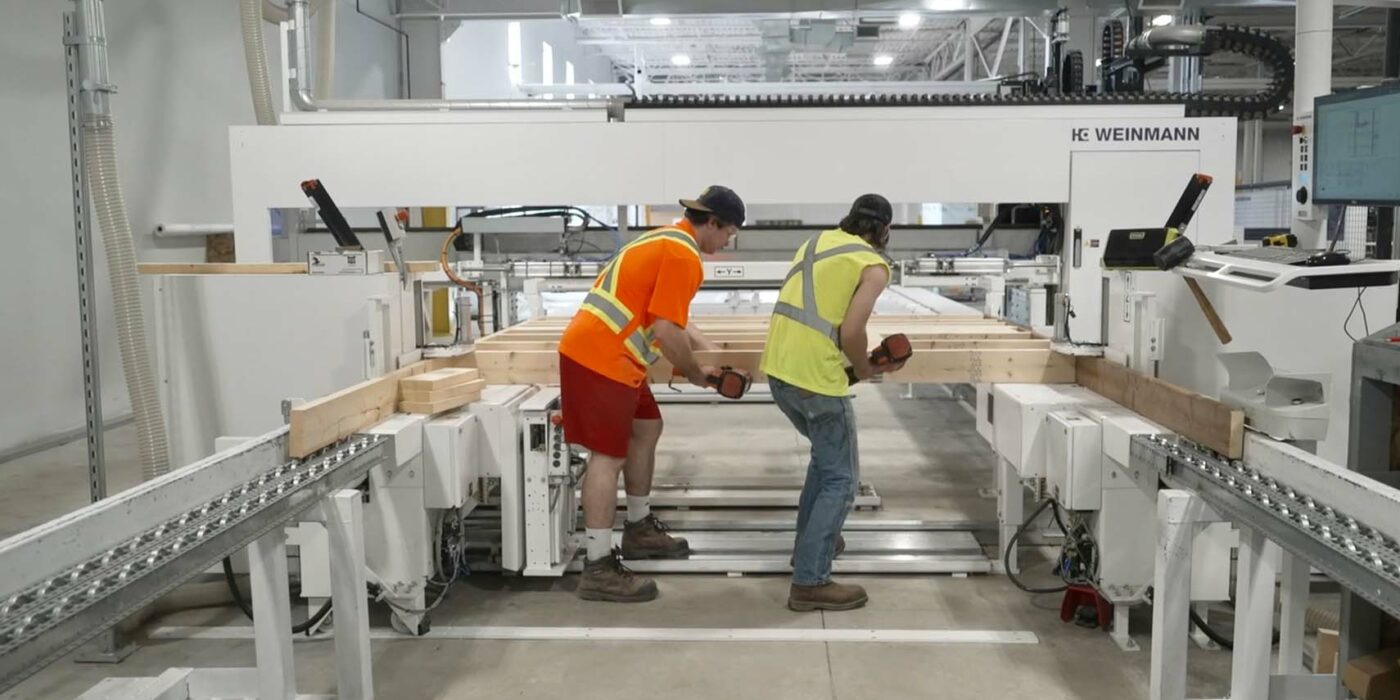
Modular framing systems involve pre-fabricating wall panels and structural components in an off-site, controlled environment. These panels are then transported to the jobsite and assembled rapidly.
Key Benefits of Modular Framing
- Faster Installs: Cut framing timelines by up to 50%.
- Labour-Saving: Smaller crews can achieve more.
- OBC-Compliant: Fully engineered to meet Ontario Building Code standards.
- On-Time Delivery: Guaranteed delivery schedules mean no waiting for materials or trades.
- Consistent Quality: Panels built indoors are protected from weather damage and constructed with precision.
Real Results: Saving 3 Weeks with Modular Framing
One Wellings Modular client needed a solution to meet a developer’s tight timeline for a subdivision project. Using our modular wall systems, their team framed a 3,000 sq ft home in just 4 days—cutting three weeks off their projected schedule.
This efficiency allowed them to move their crew to the next site earlier, saving time and reducing labour costs. The project’s success became a showcase for how modular systems can keep builders competitive in a demanding market.
How Modular Framing Works
- Design & Engineering
Our team takes your custom design and creates a virtual 3D model to verify that every component is engineered to Ontario Building Code (OBC) compliance. This process also allows for early clash detection—so if, for example, a post interferes with a tie-down, it can be resolved with the engineer and architect before anything is built or delivered to site. The result is fewer delays, no stalled crews, and a smoother construction process overall.
- Off-Site Fabrication
Panels are built in a climate-controlled facility using state-of-the-art machinery. This ensures precision and eliminates weather-related delays.
- Delivery & On-Site Assembly
Panels are transported to your site and assembled by your crew or ours. A smaller team can complete framing efficiently, freeing up resources for other jobs.
We maintain a 98% on-time delivery rate, with the rare exception caused by severe weather. In those cases, deliveries have been completed the very next day. This reliability is made possible because we own and operate our own truck and trailer and work with a dedicated driver, giving us full control over scheduling and delivery timelines.
FAQs About Modular Framing Systems
Q: Are modular systems Ontario Building Code certified?
Yes. Our systems are fully engineered and come with OBC certification and stamped drawings.
Q: Will modular framing limit my design options?
No. Our prefab systems support custom layouts, large openings, and varied elevations.
Q: Can small crews handle modular installs?
Absolutely. Many projects are completed with 3–4 person crews.
Let’s talk about how Wellings Modular helps Ontario framers build faster, safer, and smarter. Contact Us Today